
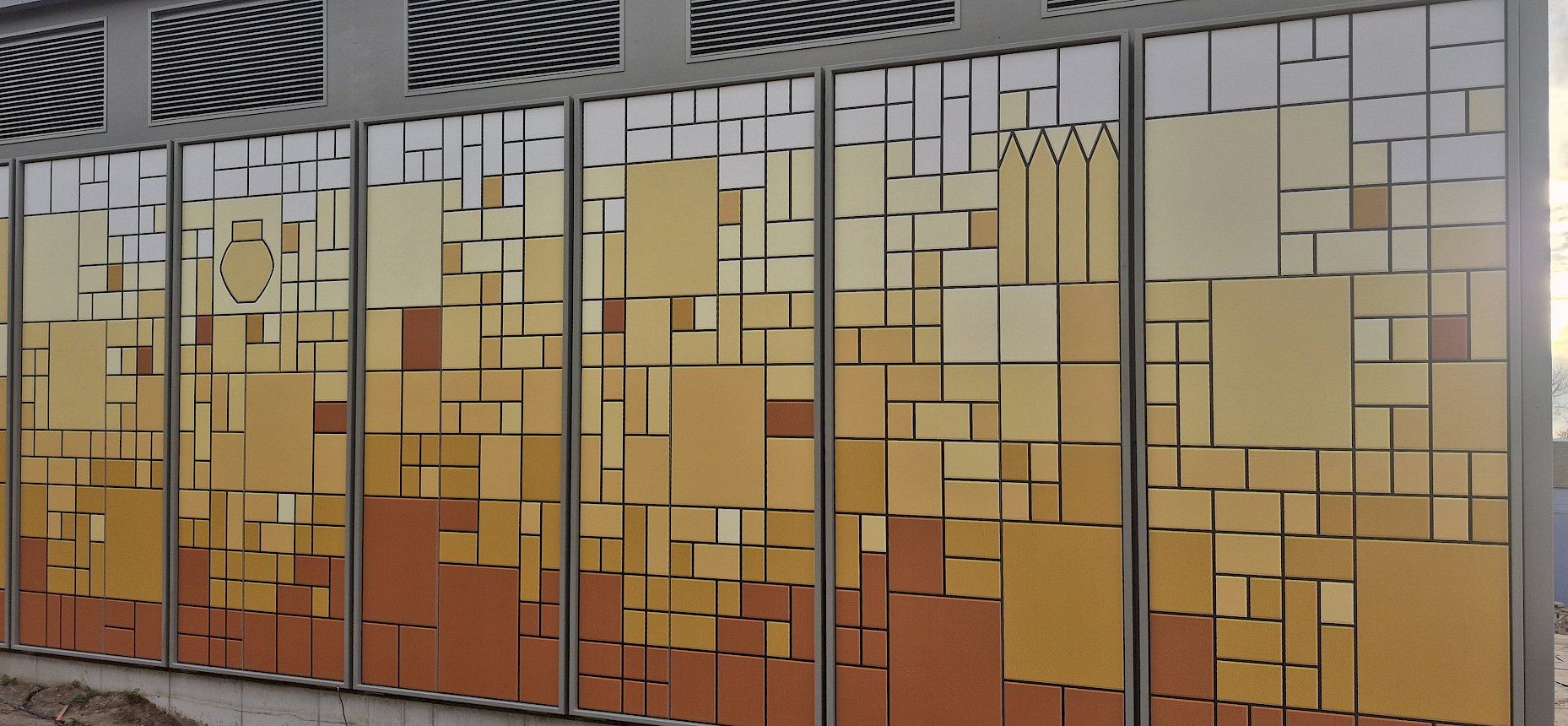
Liander substation
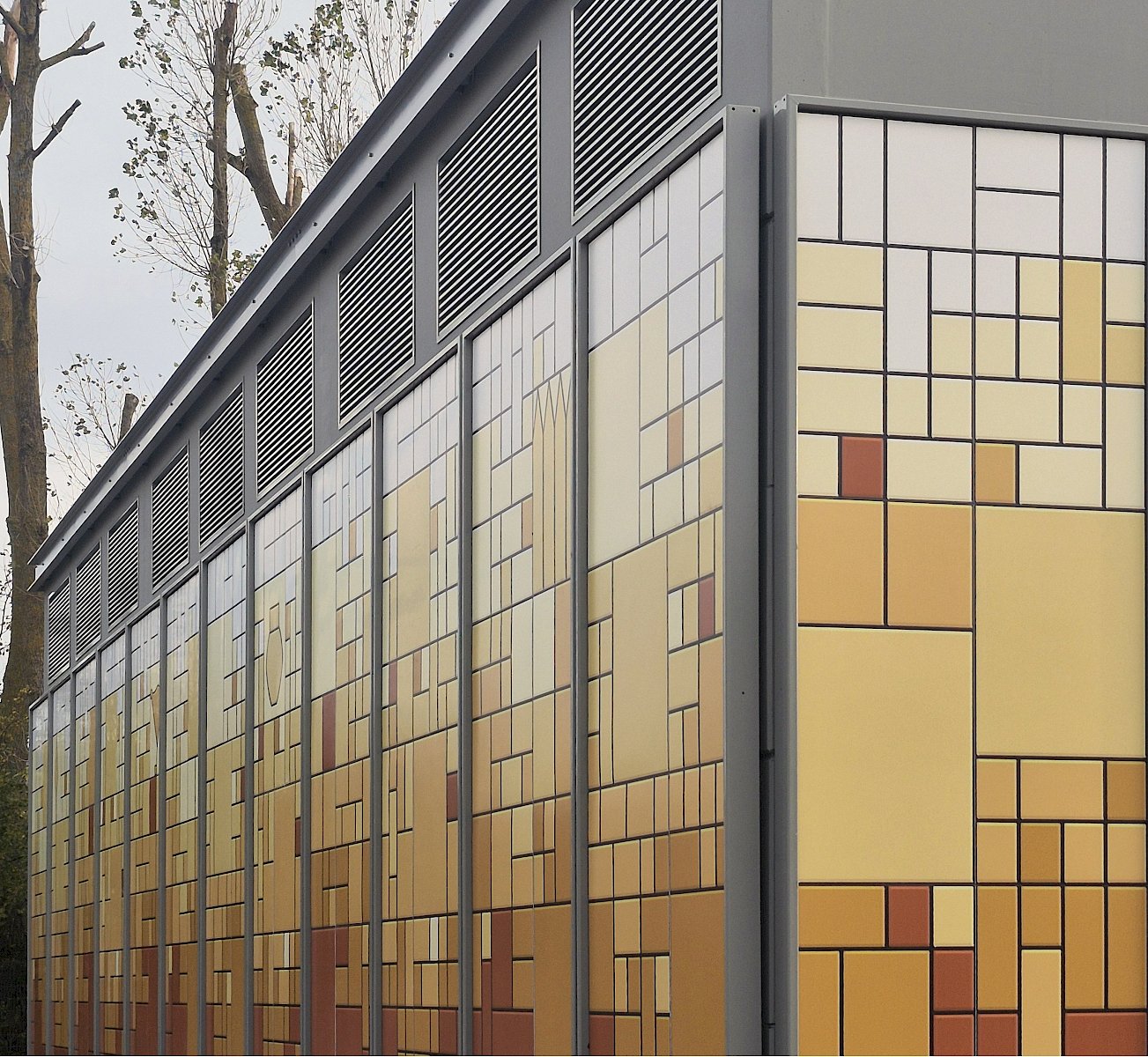
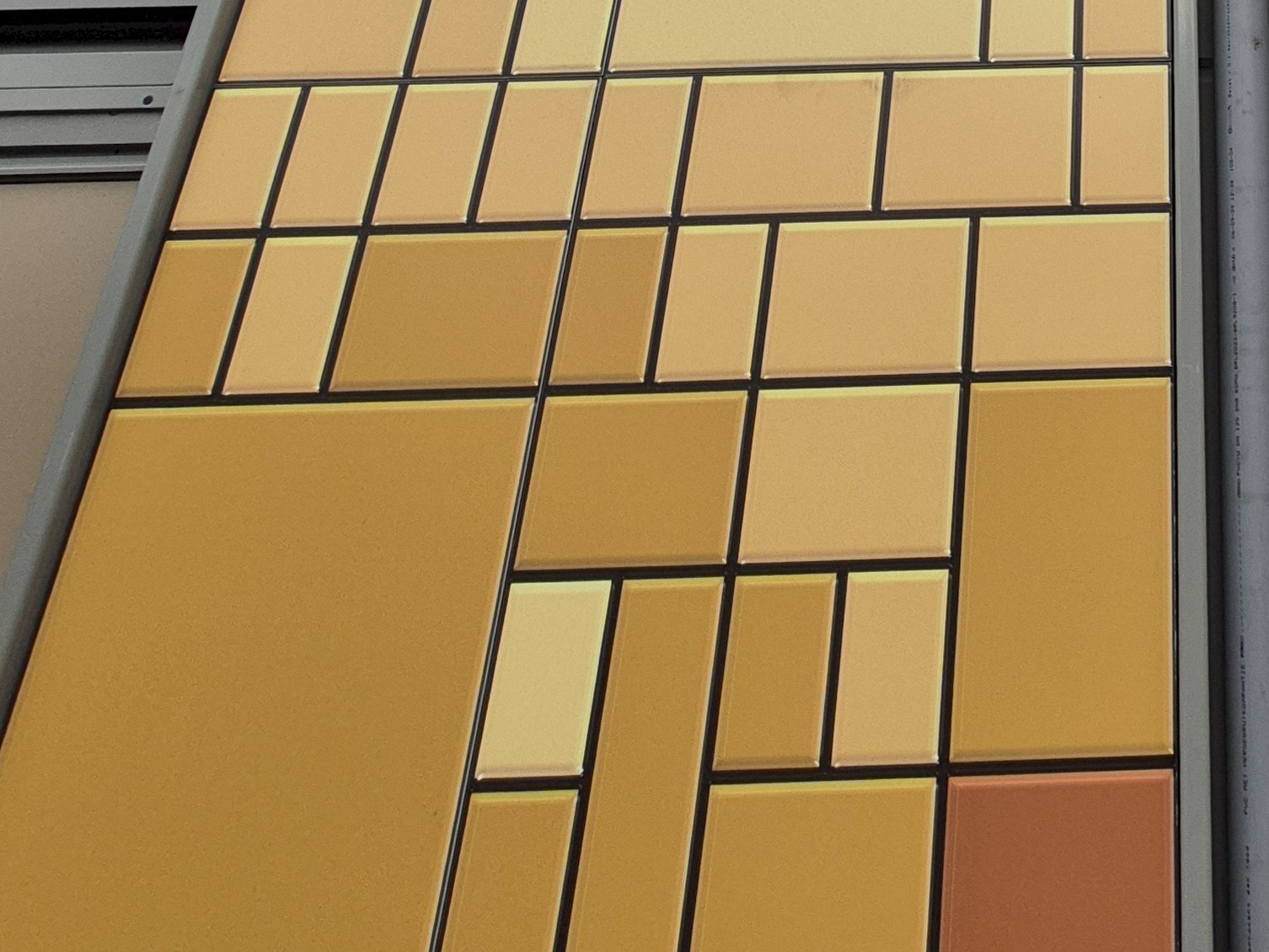
The various earth tones represent the stratification of soil layers, directly referencing the archaeological excavations carried out at this location. Elements from the discoveries — subtly incorporated into the printed graphics — enrich the design with a sense of place and history. The result is an abstract yet meaningful visual narrative that connects the substation to its archaeological context.
The concept demonstrates that printed façade cladding is not merely a tool to imitate other materials, but an opportunity to create new, expressive, and story-driven architectural surfaces. By embracing the print as a design feature in its own right, the façade gains both functional value and cultural depth.
Layered History: Archaeology as Façade Art
When remarkable archaeological discoveries were made on the Liander site, they offered a unique opportunity to weave the history of the location into the design. Architecture firm Kokon decided to adapt the original concept and give the findings a permanent place on the façade. This led to the idea of showcasing the artifacts on a custom Steni Vision cladding system.
The chosen colours are inspired by the different layers of soil, a graphic representation of the earth from which the discoveries emerged. The architect initially envisioned a façade composed of 3D-cut and bonded shapes, but this approach proved too complex and carried too many risks. Instead, the 2D designs were digitally transformed to create a convincing 3D effect.
In close collaboration with our partner M2uur bv, several design options and samples were developed. One of these concepts was ultimately selected and refined into the final façade design. Thanks to the precise installation work by Pruyssen, 162 Steni Vision panels—together covering 27 façade sections of 200 x 600 mm each—reflect the rich history of this site.